Experienced In Consult & Business Advice!
Gone are the days when users were paying hefty fees to mobile service providers to send text messages. Users today require unlimited free texts.
Scan Digital Platform
SCAN (Somaliland Civil Society Accountability Network) is an initiative aimed at strengthening accountability, transparency, and citizen participation in governance across Somaliland. It focuses on empowering Civil Society Organizations (CSOs) with the skills, knowledge, and tools they need to effectively engage in decision-making processes, advocate for citizens’ rights, and hold local authorities accountable. Through capacity building, SCAN addresses key gaps in policy formulation, participatory planning, budgeting, and leadership among CSOs, enabling them to serve as strong watchdogs and partners in development. The initiative also emphasizes gender equality and environmental sustainability, ensuring that governance efforts are inclusive and forward-looking.
To achieve its goals, SCAN facilitates the formation of a CSO Accountability Network/Taskforce (CAN/T) to unite civil society voices and establish District Development Forums (DDFs) as platforms for dialogue and monitoring between citizens, CSOs, and local authorities. A major component of the initiative is the development of a digital platform that allows for real-time communication, data sharing, and feedback collection, making governance more transparent and responsive. This platform features dashboards to track progress, repositories for reports and documents, mechanisms for public feedback and complaints, and integration with social media to broaden outreach. Ultimately, SCAN is about creating a stronger link between the people and their leaders, ensuring that governance in Somaliland is more participatory, accountable, and effective.

Annual Report
Activities
Output 3
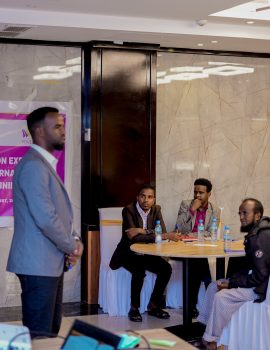
Founding Meeting of Somaliland CSOs Accountability Network (SCAN) (YOVENCO)
Output 6
Tailored Capacity Building Trainings for Somaliland Blind Organization (SOBO) and Xaq-U-Dood Organization (YOVENCO)
Collaboration
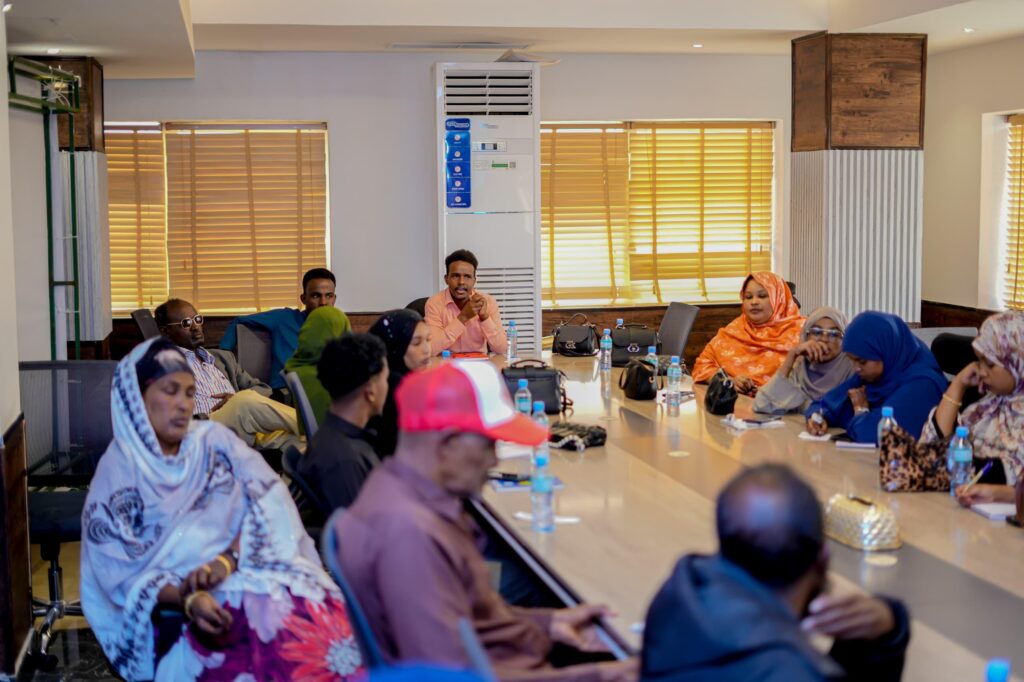
The Executive Director of YOVENCO had meetings with the mayors of Hargeisa and Berbera, and SOYDAVO had met with Burco local council officials to communicate the project’s objectives, methodology, value-addition and coordination for collaboration on strengthening the work of local governments through effective community engagement, transparent and accountable service delivery.
YOVENCO and SOYDAVO held a joint planning meeting on the EU project’s communication and visibility to ensure the donor’s contribution was recognized from the inception stage of the project.
During the reporting period, several actions were taken to ensure consistent visibility of the EU’s support, including:
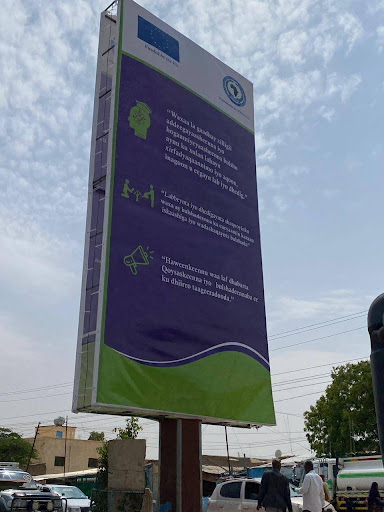
- Displaying the EU’s name and logo on all project materials, such as signage, brochures, campaign posts, banners, and the project factsheet.
- Acknowledging the EU’s contribution in project-related meetings, consultations, and other engagements, which helped increase awareness of the donor’s support among stakeholders and the wider community
- Actively sharing project activities through YOVENCO and SOYDAVO’s social media platforms, ensuring the EU was credited as the donor and its logo was visible in shared photos and videos.
Beneficiaries/affiliated entities
YOVENCO, as the lead organization, met with key project stakeholders, including the officials of the Local Government Institute, so that solid collaboration and partnership are established with relevant stakeholders.
How can we help you?
You can visit us at Yovenco NGO main Office in Hargeisa, Somaliland.
Local governance
Support transparency, accountability and policy-making in the local government
The project has made progress and is on track to achieve Outcome 1 indicators. During the reporting period, there were no major challenges that hindered or changed the outputs and activities related to this outcome. As such, all the related activities were carried out as planned, primarily focusing on gathering baseline data by researching the current state of local governance in Somaliland, with particular attention to the presence and effectiveness of transparency and accountability mechanisms, raising awareness among CSOs, CBOs, and the public on the crucial role of their participation in local governance processes, enhancing the capacities of both CSOs and local authorities, establishing partnerships between CSOs and local authorities, creating platforms for collaboration like the Somaliland CSOs Accountability Network and a digital performance-tracking platform for local authorities.
The project’s initial phase successfully delivered key capacity-building initiatives for CSOs and local authorities.
Public Campaign Toward Disability-Inclusive Public Infrastructure and Services
A public campaign was conducted in close collaboration with the Somaliland Disability Forum, which unites disability-led organizations and involved key members of the disability community as vital voices in the campaign.
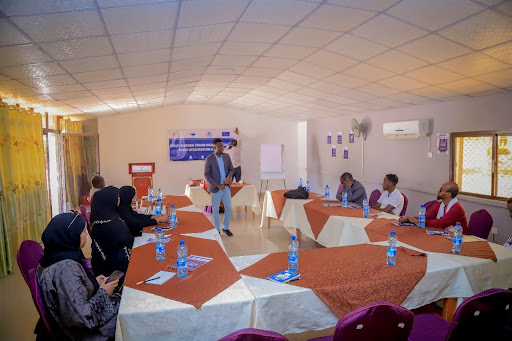
In the wake of ongoing development centered on re-constructing local government premises across the districts of Hargeisa, as well as the rehabilitation of primary and intermediate schools, spearheaded by the local government of Hargeisa, YOVENCO Organization has organized a public campaign on the promotion of disability-inclusive public infrastructure and services. The session hosted 12 members of disability focused organizations, 8M/4F. Oftentimes, people with disability struggle to access government buildings including those newly built due to the absence of proper awareness of such exclusionary practices. Many disabled people opt not to seek government services on their own because those services remain inaccessible, not just physical accessibility but also informational accessibility.
Public Campaigns for Women’s Organizations, Youth Organizations
The campaigns were a joint effort which brought together women and youth groups, local authorities, and the media. This report presents the objectives, methodology, outputs, anticipated results and ways forward for future projects.
The campaigns managed to make great strides by making people more aware and starting to change the point of view of society. The opinions and reactions to social media platforms indicated a notable decrease in the support for traditional gender stereotypes and a notable increase in the recognition of different gender identities and roles in society.
Besides that, the level of female participation in community politics was clearly up to a higher level; a very important aspect being the increased number of women running for political office and taking up leadership positions. This expanded female participation in the political process is proof of these campaign’s success.
The opinions and reactions to social media platforms indicated a notable decrease in the support for traditional gender stereotypes and a notable increase in the recognition of different gender identities and roles in society.